Finding the right clothing manufacturer is one of the most crucial decisions you’ll make when launching a fashion brand. The manufacturer you choose will directly impact your product quality, costs, delivery timelines, and ultimately, your brand’s reputation. Whether you’re creating a small batch collection or planning to scale, this comprehensive guide will walk you through the entire process of finding, vetting, and building relationships with clothing manufacturers that align with your vision and business goals.
Key Considerations Before Starting Your Search
Before diving into your search for a clothing manufacturer, it’s essential to clarify your needs and expectations. Having a clear understanding of these factors will help you narrow down your options and find the right manufacturing partner.
Define Your Product Requirements
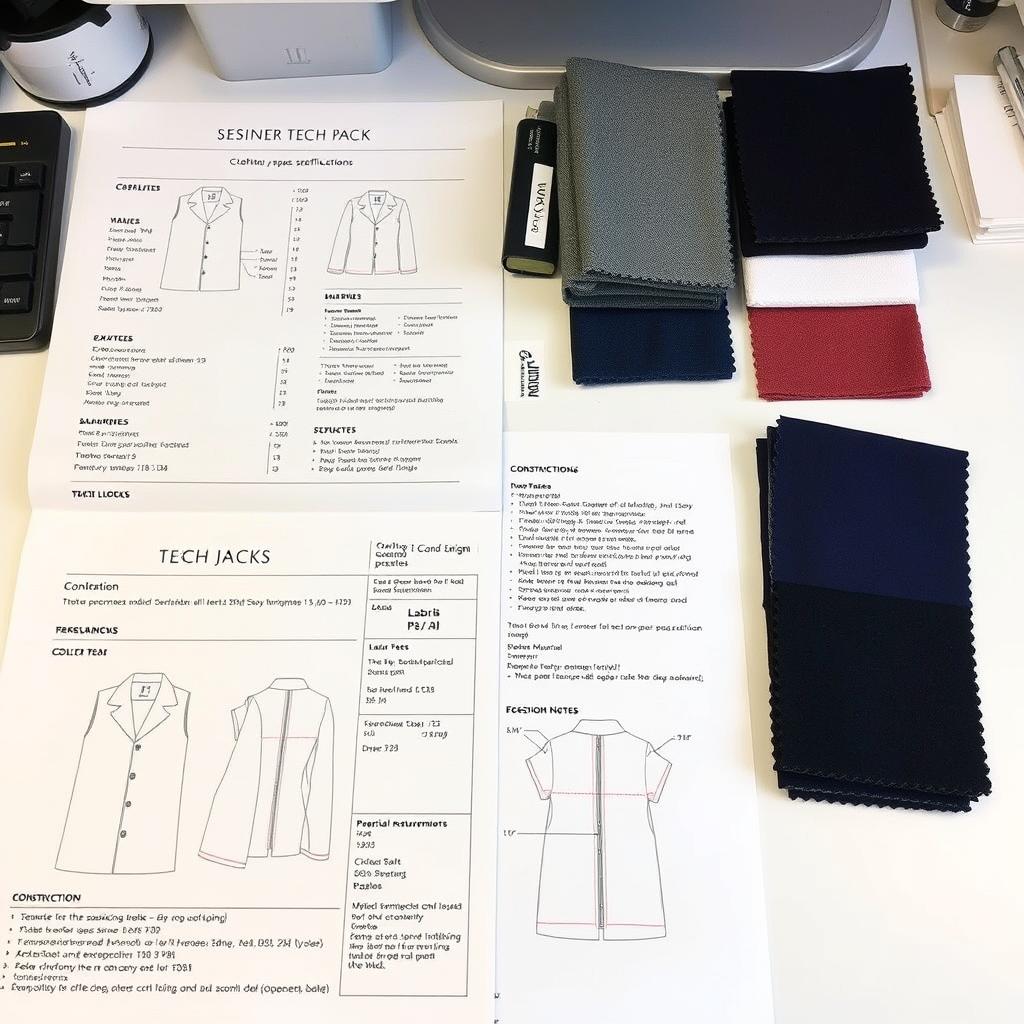
Start by creating detailed specifications for your clothing line. This includes the type of garments you want to produce, the fabrics and materials you’ll use, and any special features or techniques required. The more specific you are, the easier it will be to find a manufacturer with the right capabilities.
- Garment types (t-shirts, dresses, outerwear, etc.)
- Fabric types and quality standards
- Special techniques (embroidery, screen printing, etc.)
- Sizing and fit requirements
- Packaging and labeling needs
Establish Your Budget and Production Volume
Your budget and production volume will significantly influence which manufacturers are suitable for your brand. Most manufacturers have minimum order quantities (MOQs) that can range from a few dozen pieces to several thousand.
| Production Scale | Typical MOQ Range | Best Manufacturing Option | Approximate Cost Per Unit |
| Small Batch | 10-100 units | Local manufacturers, CMT services | Higher ($$-$$$) |
| Medium Batch | 100-500 units | Domestic manufacturers, some overseas options | Moderate ($$) |
| Large Batch | 500+ units | Overseas manufacturers | Lower ($) |
Determine Your Timeline
Manufacturing timelines can vary significantly depending on the complexity of your designs, the manufacturer’s capacity, and shipping logistics. Plan for:
- Sampling phase: 2-6 weeks
- Production: 4-12 weeks
- Shipping: 1-6 weeks (depending on location and method)
Always build in extra time for unexpected delays, especially when working with overseas manufacturers.
Free Manufacturer Research Checklist
Download our comprehensive checklist to organize your manufacturer search and ensure you don’t miss any critical details.
Types of Clothing Manufacturers: Finding Your Perfect Match
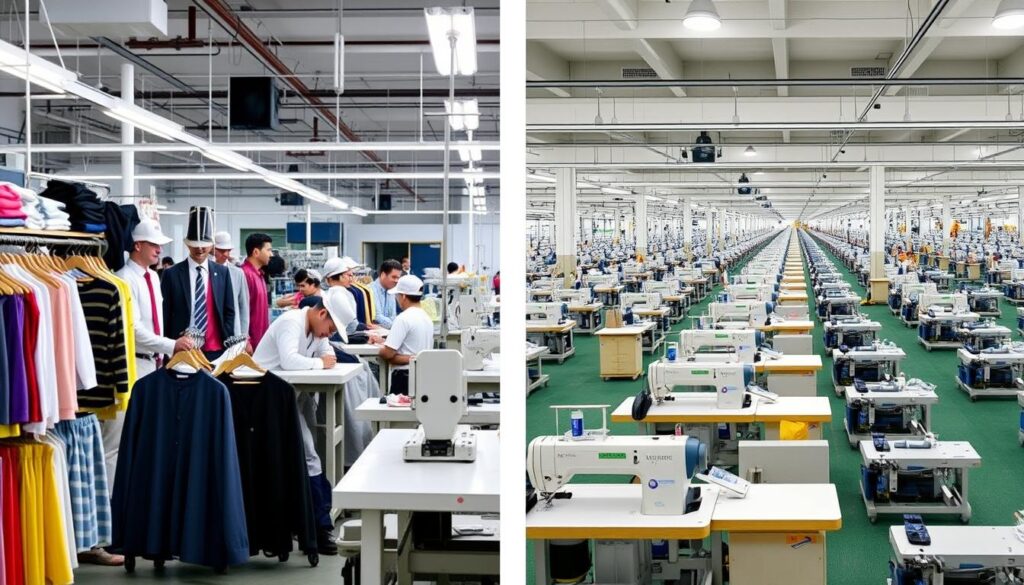
Understanding the different types of clothing manufacturers will help you identify which model best suits your business needs. Each type offers distinct advantages and limitations in terms of cost, quality control, and production capabilities.
Domestic vs. Overseas Manufacturers
Domestic Manufacturers: Advantages
- Easier communication and fewer language barriers
- Shorter shipping times and lower shipping costs
- More control over production quality
- Easier to visit facilities and build relationships
- Often more flexible with smaller orders
- “Made in USA/UK/etc.” marketing advantage
- Better intellectual property protection
Domestic Manufacturers: Challenges
- Higher production costs
- Limited capacity for large-scale production
- Fewer specialized manufacturing options
- More competition for factory time
- Higher minimum order quantities for some facilities
Overseas Manufacturers: Advantages
- Lower production costs
- Specialized expertise in specific garment types
- Greater capacity for large orders
- Access to a wider range of materials
- Often more experienced with export procedures
Overseas Manufacturers: Challenges
- Communication challenges and time zone differences
- Longer shipping times and higher shipping costs
- More difficult to monitor quality control
- Cultural and business practice differences
- Potential import duties and customs complications
- Ethical and sustainability concerns in some regions
Manufacturing Service Models
CMT (Cut, Make, Trim)
You provide the patterns, fabrics, and materials—they handle cutting, sewing, and finishing.
Best for: Brands with sourcing connections and design expertise.
Full Package Production
The manufacturer handles everything from sourcing to production based on your designs.
Best for: Brands seeking a turnkey solution with less production management.
Private Label
Choose from pre-designed products and customize with your branding.
Best for: Quick launches with lower development costs.
Small Batch Specialists
Manufacturers that specialize in smaller production runs with higher quality.
Best for: Startups, limited editions, and test collections.
Where to Find Clothing Manufacturers
With your requirements defined and an understanding of the different types of manufacturers, it’s time to start your search. There are multiple channels for finding potential manufacturing partners, each with its own advantages.
Online Directories and Sourcing Platforms
Online directories are one of the most accessible ways to find clothing manufacturers. These platforms allow you to filter by location, production capabilities, minimum order quantities, and more.
- Alibaba – Largest global B2B marketplace with thousands of manufacturers, primarily from Asia.
- Maker’s Row – Platform focused on connecting brands with American manufacturers.
- Sourcify – Helps brands find pre-vetted manufacturers and manage production.
- Kompass – Global B2B directory with manufacturers across various countries.
- Sqetch – European-focused platform connecting fashion brands with manufacturers.
- Common Objective – Sustainable fashion sourcing platform with ethical manufacturers.
“When using online directories, always verify a manufacturer’s credentials independently. Request samples, check references, and if possible, arrange a facility visit before committing to production.”
Trade Shows and Industry Events
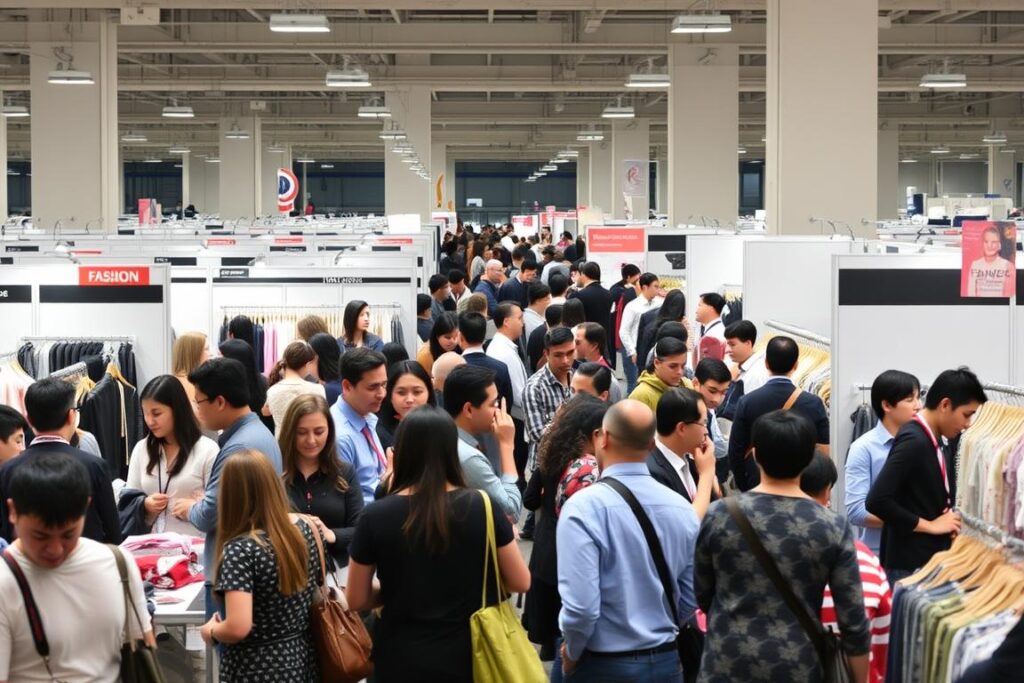
Trade shows provide an invaluable opportunity to meet manufacturers face-to-face, see their work firsthand, and build personal connections. Key trade shows include:
North America
- MAGIC (Las Vegas)
- Texworld USA (New York)
- Apparel Textile Sourcing (Toronto, Miami)
- LA Textile (Los Angeles)
Europe & Asia
- Première Vision (Paris)
- Texfusion (London)
- Intertextile Shanghai
- ITMA Asia (Shanghai)
Industry Referrals and Networking
Some of the best manufacturing partnerships come through personal referrals from others in the industry. Build your network through:
- Fashion incubators and accelerator programs
- Industry associations and chambers of commerce
- LinkedIn groups for fashion entrepreneurs
- Facebook communities for clothing startups
- Local fashion schools and design programs
- Existing brands with complementary (not competing) products

Local Manufacturing Resources
Don’t overlook local resources that can help connect you with manufacturers:
- Small Business Development Centers
- Local economic development offices
- Manufacturing Extension Partnerships (in the US)
- Industry-specific government programs
Manufacturer Directory Access
Join our community to access our curated directory of 500+ verified clothing manufacturers across 30+ countries, complete with reviews and specializations.
How to Vet Potential Clothing Manufacturers
Finding manufacturers is just the first step. Properly vetting them is crucial to ensure they can meet your quality standards, timeline requirements, and business values. This process helps you avoid costly mistakes and production nightmares.
Initial Research and Screening
Before reaching out to manufacturers, conduct preliminary research to create a shortlist of potential partners:
- Check their website and online presence for professionalism and transparency
- Research their client portfolio and the types of brands they work with
- Look for reviews, testimonials, and case studies
- Verify their business registration and years in operation
- Check for relevant certifications (ISO, WRAP, GOTS, etc.)
- Research their production capabilities and specializations
Request and Evaluate Samples
Samples are the best way to assess a manufacturer’s quality and capabilities firsthand:
- Request samples of previous work similar to your product
- Order a custom sample of your specific design
- Evaluate construction quality, stitching, and finishing
- Check fabric quality and color accuracy
- Test durability through washing and wear
- Compare samples from multiple manufacturers
Pro Tip: Always be prepared to pay for custom samples. Quality manufacturers invest significant resources in sample development, and sample fees demonstrate your seriousness as a potential client.
Assess Communication and Responsiveness
How a manufacturer communicates during the inquiry and sampling phase often reflects how they’ll handle your production:
- Evaluate response time to inquiries
- Assess clarity and thoroughness of communication
- Note their willingness to answer questions and provide information
- Check if they offer suggestions and improvements to your designs
- Evaluate their English proficiency (for overseas manufacturers)
- Test their technical knowledge when discussing your product
Verify Ethical and Sustainability Practices
For many brands, ensuring ethical manufacturing is a core value:
Ethical Manufacturing Verification
- Request information on worker conditions and wages
- Check for certifications like WRAP, SA8000, or Fair Trade
- Ask about overtime policies and worker benefits
- Inquire about health and safety measures
Sustainability Verification
- Ask about waste management practices
- Inquire about water usage and treatment
- Check for certifications like GOTS, Oeko-Tex, or BlueSign
- Discuss their approach to sustainable materials
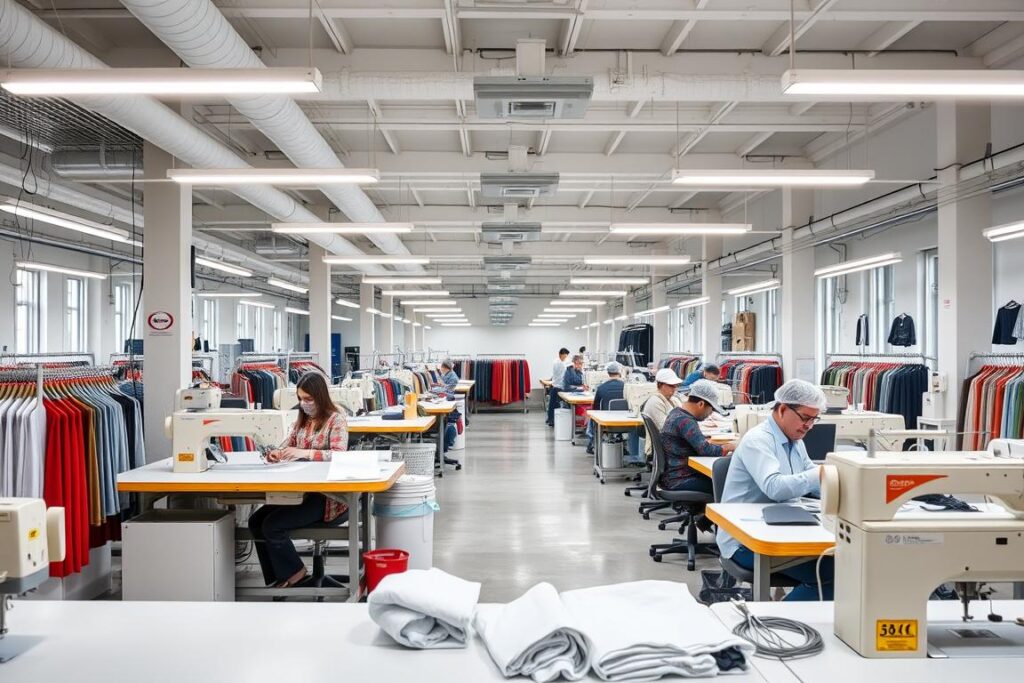
Essential Questions to Ask Potential Clothing Manufacturers
Asking the right questions helps you gather critical information and determine if a manufacturer is the right fit for your brand. These questions cover everything from capabilities and costs to policies and procedures.
Production Capabilities and Specialization
- What types of garments do you specialize in producing?
- What fabrics and materials do you have experience working with?
- What is your monthly production capacity?
- Do you offer pattern making, grading, and sample development?
- Can you handle specialized techniques like embroidery, screen printing, or dyeing?
- Do you have experience with the specific type of clothing I want to produce?
Minimums, Pricing, and Payment Terms
- What is your minimum order quantity (MOQ) per style and color?
- Do you offer flexible MOQs for startups or first orders?
- What is your pricing structure? Do you offer volume discounts?
- What are your payment terms and accepted payment methods?
- Are there additional costs for sampling, pattern making, or other services?
- What is your sample development cost and timeline?
Quality Control and Production Process
- What quality control measures do you have in place?
- How do you handle defects or quality issues?
- Can you provide quality control reports during production?
- What is your typical defect rate?
- Do you allow for in-person quality inspections?
- How do you ensure consistency across production runs?
Timeline and Logistics
- What is your typical lead time for sampling and production?
- How do you handle production delays?
- Do you manage shipping and logistics?
- What shipping methods do you use?
- Do you handle customs documentation for international shipping?
- How do you package finished products?
Communication and Support
- Who will be my main point of contact?
- How frequently will I receive production updates?
- What is your preferred communication method?
- Do you have English-speaking staff? (for overseas manufacturers)
- What hours are you available for communication?
- How do you handle design revisions or changes during production?
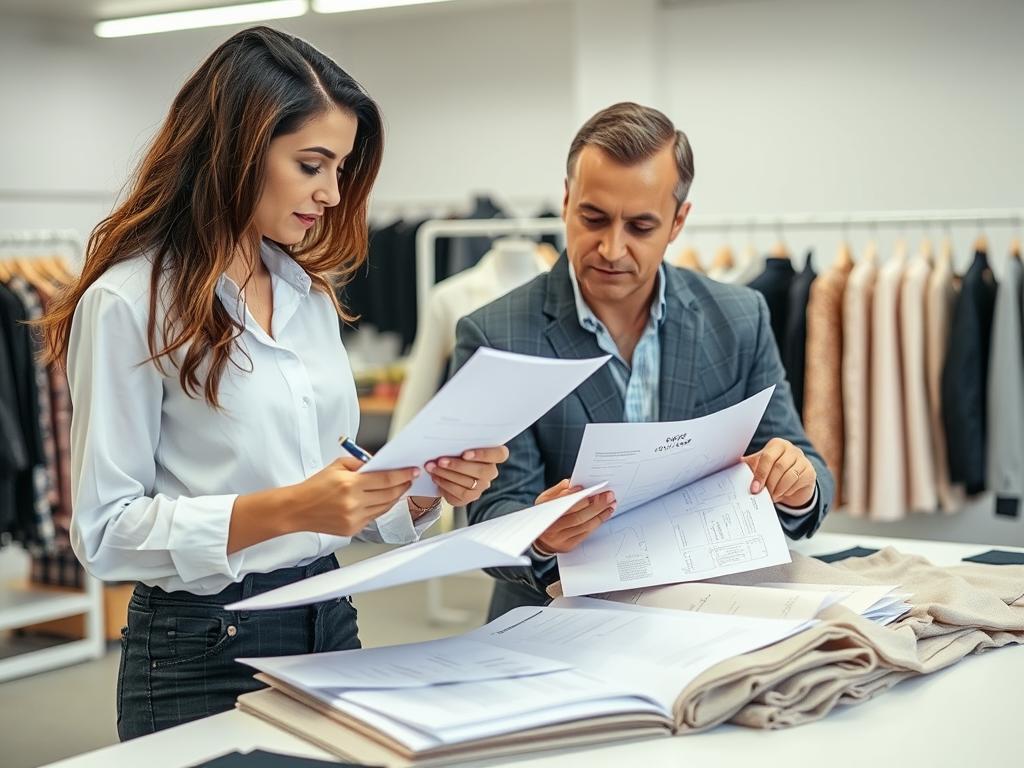
Understanding Manufacturing Costs and Minimums
Manufacturing costs can make or break your clothing business. Understanding the factors that influence pricing and minimums will help you negotiate effectively and build realistic financial projections.
Factors Affecting Manufacturing Costs
Material Costs
- Fabric type and quality
- Trims (buttons, zippers, etc.)
- Special treatments or finishes
- Sustainable or certified materials
Labor Costs
- Manufacturing location
- Garment complexity
- Skill level required
- Production volume
Additional Costs
- Pattern making and grading
- Sampling and revisions
- Quality control
- Packaging and labeling
- Shipping and duties
Navigating Minimum Order Quantities (MOQs)
Minimum order quantities can be a significant hurdle for startups. Here are strategies for working with MOQs:
- Negotiate lower MOQs for first orders – Many manufacturers will reduce minimums for new clients with growth potential.
- Start with fewer styles in more colors – Instead of 10 styles with 1 color each, try 3 styles with 3-4 colors each.
- Consider local manufacturers – They often have lower MOQs than overseas factories.
- Look for manufacturers that specialize in small runs – Some factories cater specifically to startups and small brands.
- Combine orders with other small brands – Partner with complementary brands to meet minimums together.
- Start with a test order – Some manufacturers will allow a smaller initial order to test quality before committing to larger quantities.
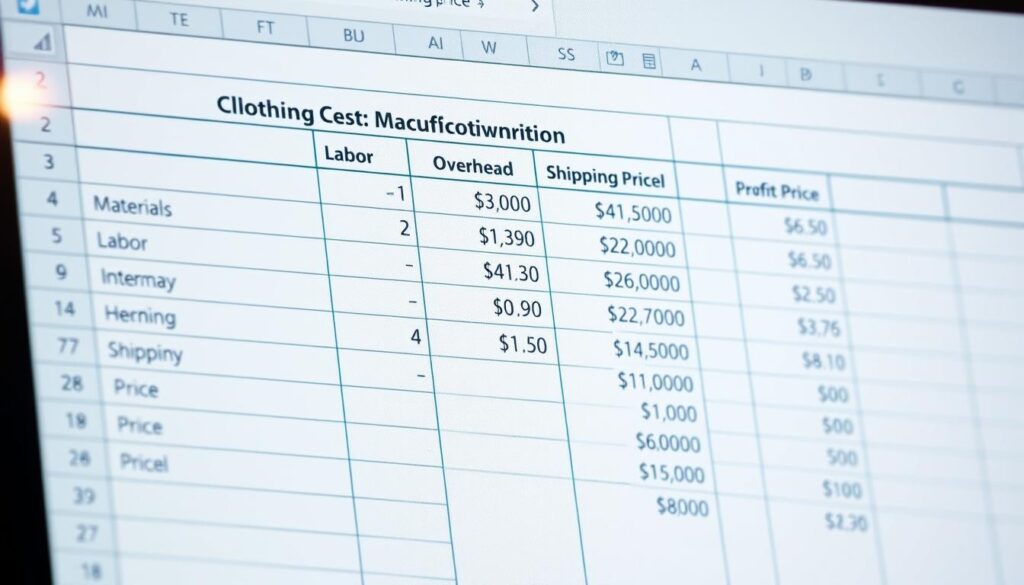
Hidden Costs to Consider
When budgeting for manufacturing, be aware of these often-overlooked costs:
| Cost Category | Description | Typical Range |
| Development Costs | Pattern making, grading, samples, revisions | $500-$3,000+ per style |
| Quality Control | In-line inspections, final inspections | $200-$500 per inspection |
| Shipping & Logistics | Freight, customs, duties, insurance | 10-25% of production cost |
| Labeling & Packaging | Hang tags, care labels, packaging materials | $0.50-$5 per unit |
| Compliance & Testing | Safety testing, certification, compliance | $500-$2,000+ per style |
Building Strong Relationships with Clothing Manufacturers
The most successful fashion brands develop long-term partnerships with their manufacturers. These relationships lead to better quality, more favorable terms, and smoother production processes over time.

Starting with a Trial Order
Before committing to a large production run, start with a smaller trial order to test the working relationship:
- Begin with your simplest styles to evaluate basic capabilities
- Order enough units to test the full production process
- Establish clear quality standards and expectations
- Monitor communication and responsiveness throughout the process
- Evaluate the final product quality thoroughly
- Assess on-time delivery and problem-solving abilities
Communication Best Practices
Effective communication is the foundation of successful manufacturing partnerships:
Do’s
- Provide clear, detailed tech packs and specifications
- Set realistic deadlines and expectations
- Respond promptly to questions and concerns
- Document all agreements and changes in writing
- Express appreciation for good work
- Learn key industry terms in their language (for overseas manufacturers)
Don’ts
- Make last-minute design changes without acknowledging the impact
- Communicate only when there are problems
- Assume they understand your requirements without confirmation
- Ignore cultural differences in business practices
- Constantly pressure for faster timelines
- Neglect to provide feedback on completed work
Managing Quality Control
Consistent quality control is essential for maintaining product standards:
- Create detailed quality standards – Document specific requirements for materials, construction, measurements, and appearance.
- Implement inspection points – Schedule inspections at critical production stages: pre-production, during production, and final inspection.
- Use a standardized QC checklist – Create a comprehensive checklist for evaluating samples and production runs.
- Consider third-party inspections – For overseas production, hire independent quality control services.
- Establish a defect rate threshold – Define acceptable quality levels (AQL) and procedures for addressing defects.
- Document and communicate issues – Provide clear feedback with photos and specific details when problems arise.
Quality Control Checklist Template
Download our comprehensive quality control checklist template to ensure your manufactured garments meet your brand’s standards.
Common Pitfalls to Avoid When Working with Clothing Manufacturers
Even experienced fashion brands can encounter challenges when working with manufacturers. Being aware of these common pitfalls can help you navigate the production process more smoothly.
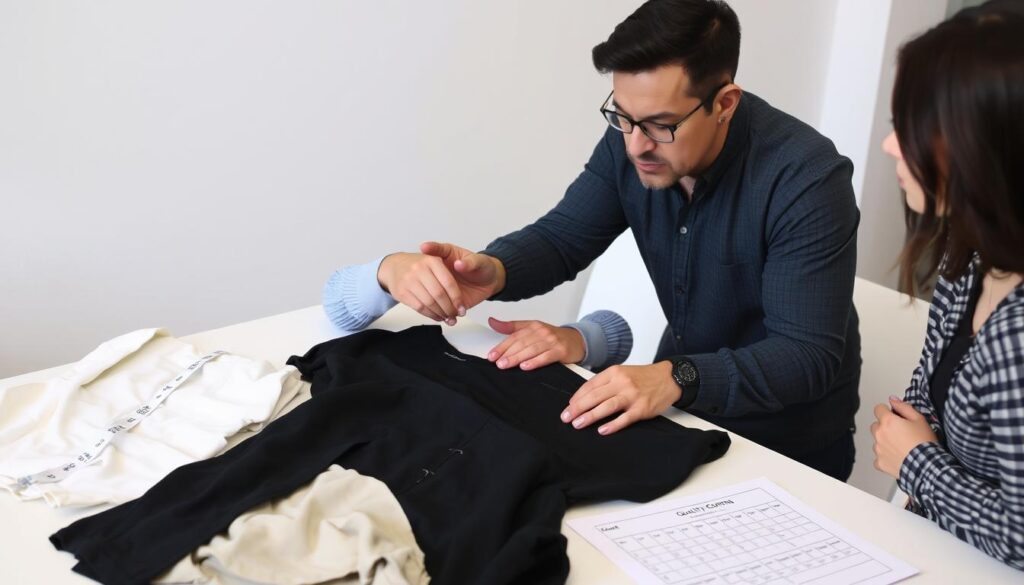
Red Flags When Selecting Manufacturers
Watch out for these warning signs when evaluating potential manufacturing partners:
- Reluctance to provide references – Quality manufacturers should be willing to share testimonials from past clients.
- Unusually low prices – If the quote is significantly lower than others, there’s likely a quality or ethical compromise.
- Vague or inconsistent communication – Clear communication is essential for successful production.
- Unwillingness to sign contracts – Reputable manufacturers will agree to formal terms and conditions.
- Requesting full payment upfront – Standard practice is a deposit (30-50%) with balance due before shipping.
- Resistance to quality control measures – Good manufacturers welcome quality inspections.
- Inability to provide samples – Quality manufacturers can and will produce samples of your designs.
Warning: Be especially cautious of manufacturers who claim they can do everything (design, sourcing, production) with unusually fast turnaround times and low prices. This often indicates overpromising that leads to disappointment.
Common Production Challenges
Prepare for these typical challenges in the manufacturing process:
Technical Issues
- Fabric shrinkage or color variations
- Sizing inconsistencies across production runs
- Construction difficulties with complex designs
- Material availability and substitutions
Business Challenges
- Production delays due to capacity issues
- Communication misunderstandings
- Unexpected cost increases
- Shipping and customs complications
Protecting Your Designs and Intellectual Property
Take these steps to protect your designs when working with manufacturers:
- Use non-disclosure agreements (NDAs) before sharing designs
- Work with manufacturers who respect intellectual property rights
- Consider registering trademarks and design patents
- Limit access to your complete design portfolio
- Build relationships based on trust and mutual respect
- Research intellectual property laws in the manufacturer’s country
Resources and Tools for Managing Manufacturer Relationships
Effectively managing your manufacturing relationships requires organization, documentation, and the right tools. These resources can help streamline your production process and maintain quality standards.
Essential Documentation
Proper documentation is crucial for clear communication and quality control:
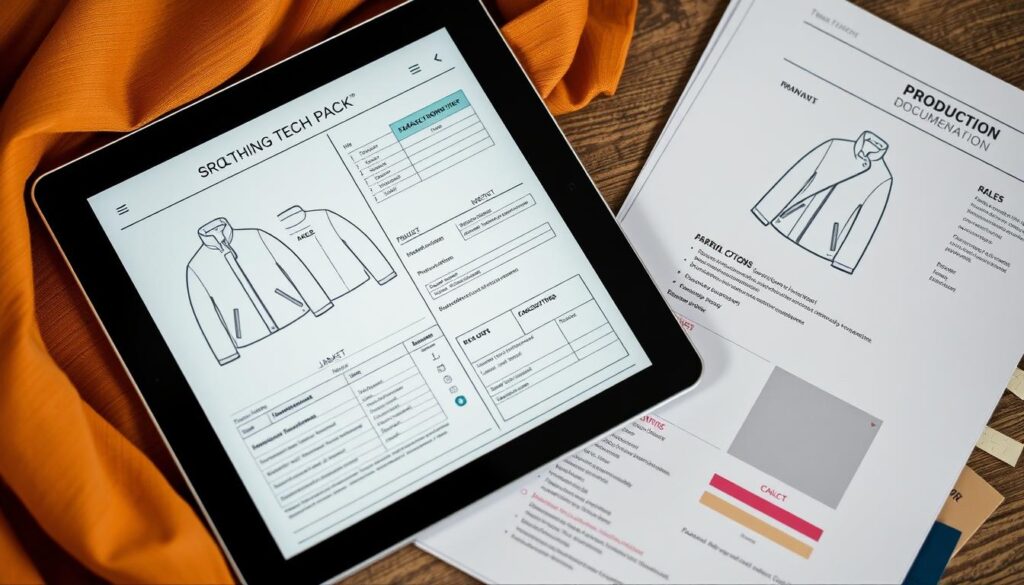
Tech Packs
Comprehensive technical documents that detail every aspect of your garment design and construction.
- Design sketches (front, back, details)
- Material specifications
- Construction notes
- Measurements and grading
- Trim details and placement
Production Agreements
Formal contracts that outline the terms of your manufacturing relationship.
- Pricing and payment terms
- Production timeline
- Quality standards
- Intellectual property protection
- Dispute resolution process
Quality Control Documents
Tools for ensuring consistent product quality across production runs.
- Inspection checklists
- Defect classification guide
- Acceptable Quality Level (AQL) standards
- Sample approval forms
- Testing requirements
Production Management Software
These digital tools can help you manage your manufacturing process more efficiently:
- Techpacker – Cloud-based tech pack creation and management platform.
- Sourcify – Production management platform connecting brands with manufacturers.
- Centime – Supply chain management software for fashion brands.
- Suuchi – End-to-end supply chain platform for fashion companies.
- ApparelMagic – ERP system designed specifically for fashion businesses.
- PLM systems – Product Lifecycle Management software for larger operations.
Industry Organizations and Support Networks
Connect with these organizations for additional resources and support:
- Fashion Industry Network – Online community for fashion professionals.
- Council of Fashion Designers of America (CFDA) – Professional association offering resources for designers.
- Sustainable Apparel Coalition – Global alliance for sustainable production.
- Textile Exchange – Non-profit focused on sustainable fiber and materials.
- Local fashion incubators – Many cities have incubator programs for fashion startups.
- Small Business Development Centers – Government-funded centers offering free business consulting.
Next Steps: Finding Your Perfect Manufacturing Partner
Finding the right clothing manufacturer is a journey that requires research, patience, and due diligence. By following the steps outlined in this guide, you’ll be well-equipped to identify and build relationships with manufacturers that align with your brand’s vision, quality standards, and business goals.
- Define your requirements – Be clear about your product specifications, budget, timeline, and production volume.
- Research potential manufacturers – Use online directories, trade shows, and industry referrals to create a shortlist.
- Vet your candidates – Request samples, check references, and evaluate communication and quality.
- Start small – Begin with a trial order to test the working relationship before scaling up.
- Build the relationship – Invest in clear communication, fair business practices, and mutual respect.
- Continuously improve – Regularly review your manufacturing partnerships and make adjustments as your brand grows.
Remember that finding the right manufacturer is not just about price—it’s about finding a partner who understands your vision, delivers consistent quality, and can grow with your brand. The time and effort you invest in this process will pay dividends in product quality, customer satisfaction, and business success.
Ready to Find Your Perfect Manufacturing Partner?
Download our comprehensive manufacturer sourcing guide with templates, checklists, and a directory of pre-vetted clothing manufacturers across various specialties and locations.
Get Expert Manufacturing Guidance
Have questions about finding the right clothing manufacturer for your brand? Complete the form below to receive personalized recommendations and resources.