Starting a new clothing line is an exciting journey. Your success depends heavily on the production partner you choose. The right partnership influences your designs, quality, and how customers see your brand.
In today’s fast-moving fashion world, trends change quickly. More brands now value transparent and local partnerships. It’s not just about finding the lowest cost. It’s about building a relationship that supports your business goals.
A great clothing manufacturer becomes an extension of your team. They help you maintain high standards and meet deadlines. This careful selection process is a powerful step toward building a successful clothing brand.
Key Takeaways
- Choosing the right production partner is critical for product quality and brand reputation.
- The fashion industry is shifting towards faster production and transparent sourcing.
- Prioritize quality partnerships over simply finding the lowest-cost option.
- Evaluate a manufacturer’s capabilities, communication, and alignment with your values.
- A strong manufacturing partnership provides a significant competitive advantage.
- The right partner helps ensure consistent quality and customer satisfaction.
- Resources like www.supplycloth.com can connect you with vetted manufacturers.
Essential Qualities of a Reliable Garment Factory
Beyond basic production, exceptional clothing manufacturers distinguish themselves through two critical pillars. These core strengths ensure your vision becomes a tangible product that meets market demands.
A strong partner does more than just assemble clothing. They become a strategic ally in building your brand’s reputation.
Commitment to Quality and Consistency
Top-tier manufacturers build their reputation on unwavering standards. This means rigorous checks at every stage, from material selection to final stitching.
They often use premium fabrics and partner with well-known brands. These collaborations, like those with ASOS or Tesco, serve as a testament to their dedication. Consistent output is the true mark of excellence.
Customization and Flexibility in Production
In a crowded market, your designs need to stand out. The best partners offer extensive customization services to make your vision unique.
This includes private labeling, cut & sew, and OEM support. They work with you to adjust designs and manage the entire custom order process. This flexibility is crucial for brands of all sizes.
Here’s a quick comparison of common customization services offered by leading manufacturers:
| Service Type | Primary Focus | Your Involvement | Best For |
|---|---|---|---|
| Private Label | Adding your brand’s logo and tags to pre-made designs. | Selecting designs and providing branding assets. | Quick market entry with established styles. |
| Cut & Sew | Creating unique clothing from scratch based on your specifications. | Providing detailed tech packs and design input. | Brands with fully original designs. |
| OEM (Original Equipment Manufacturer) | Producing items exactly to your provided blueprints and samples. | Supplying complete product specifications and samples. | Precise replication of a specific product design. |
This level of service allows for true creative freedom. It ensures your final product is exactly what you imagined.
Production Capabilities & Quality: What to Expect
When evaluating potential production partners, their operational capabilities reveal much about their suitability for your brand. Understanding typical production timelines and quality standards helps set realistic expectations.
Capacity and Turnaround Times
Production capacity varies widely among manufacturers. Some specialize in small batches perfect for startups, while others handle massive volumes for established brands.
Standard order turnaround typically ranges from 7-20 days. Rush services may offer 3-day delivery for urgent needs. Always verify current capacity before placing large orders.
| Production Scale | Monthly Capacity | Ideal For | Typical Turnaround |
|---|---|---|---|
| Small Batch | 50-2,000 pieces | Startups & testing | 7-10 days |
| Mid-Scale | 2,000-50,000 pieces | Growing brands | 10-15 days |
| Large Scale | 50,000-400,000+ pieces | Established companies | 15-20 days |
Quality Assurance Protocols
Quality control should happen at multiple stages. Look for manufacturers with thorough inspection processes.
Proper quality assurance includes fabric checks, in-process monitoring, and final inspections. These steps ensure consistent output that meets your specifications.
Transparent communication about production schedules is essential. The best partners provide regular updates and realistic delivery commitments.
Sustainability and Ethical Practices in Garment Manufacturing
Today’s clothing industry is changing. More brands now see the value of eco-friendly production. This shift is driven by consumers who care about the planet.
Choosing a manufacturer with strong sustainability practices is smart. It shows your brand cares about more than just profits.
These manufacturers use eco-friendly materials. Popular choices include organic cotton and recycled polyester. These fabrics reduce environmental impact.
Look for important certifications like GOTS. This ensures materials are organic and production is ethical. It’s a sign of true commitment.
Ethical manufacturing also means treating workers fairly. Safe conditions and fair wages are key. This leads to better quality products.
Platforms like www.supplycloth.com connect you with these forward-thinking manufacturers. They help your brand make a positive difference.
Innovative Technologies in Cut & Sew and Screen Printing
The modern apparel landscape is defined by advanced manufacturing technologies that empower brand differentiation. These tools move beyond basic production, allowing for complete creative control.
Partners found on platforms like www.supplycloth.com often lead with these capabilities.
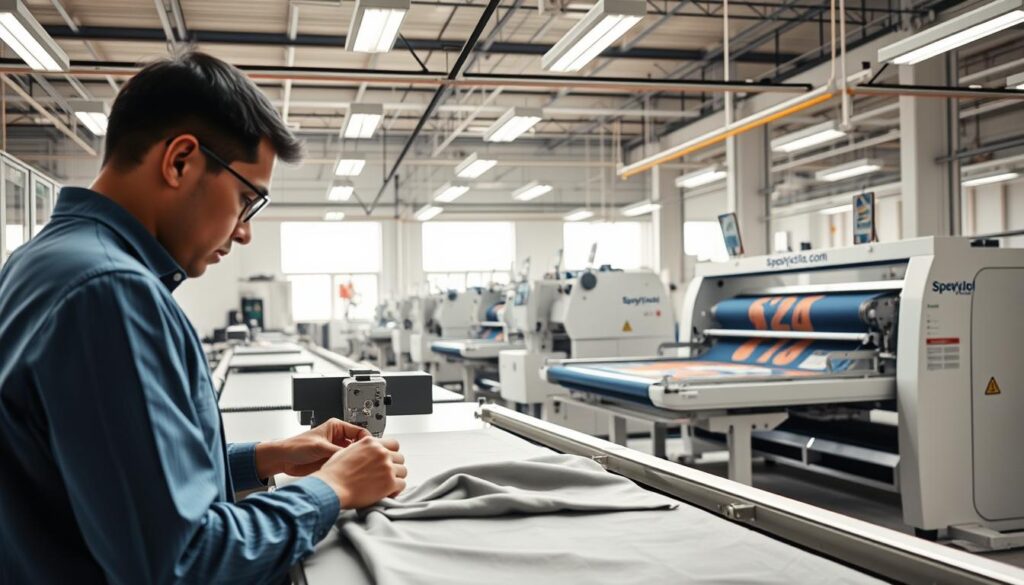
Cut and sew services provide the ultimate freedom. This approach builds a garment from scratch based on your unique patterns.
It covers everything from initial design development to final stitching. This is ideal for brands that want a fully custom clothing line.
“The integration of digital processes has fundamentally changed small-batch production, making high-quality custom apparel accessible to everyone.”
Advanced Machinery and Techniques
Modern printing services are diverse. Screen printing remains a top choice for bulk orders with bold, simple designs.
It offers vibrant colors and excellent durability on many fabric types. For textured, premium branding, embroidery adds a sophisticated touch.
Integration of Digital Printing Processes
Digital technology has revolutionized printing. Direct-to-Garment (DTG) printing allows for photo-quality images with no minimum order.
Sublimation printing is perfect for all-over patterns and activewear, producing vivid, lasting colors.
Here’s a comparison of popular printing methods:
| Printing Method | Best For | Order Size | Key Advantage |
|---|---|---|---|
| Screen Printing | Bold logos, simple graphics | Large quantities | Cost-effective for bulk |
| DTG Printing | Detailed, photo-realistic images | Small batches (1+) | No setup fees |
| Sublimation | All-over patterns, activewear | Variable | Vibrant, seamless prints |
| Embroidery | Premium branding, logos | Variable | Textured, durable finish |
This range of services ensures you can find the perfect manufacturing solution for any project.
Pricing, Order Minimums, and Negotiation Strategies
Navigating the financial side of production is a crucial step for any clothing brand. Understanding costs and order requirements helps you build a sustainable business.
Let’s break down the key elements you’ll encounter.
Understanding Pricing Structures and MOQs
Minimum order quantity, or MOQ, is the smallest amount a producer will make for one design. These numbers vary a lot between different manufacturers.
Some are perfect for startups with MOQs as low as 50 pieces. Others require 200-350+ pieces per style. A lower MOQ offers flexibility for testing new designs.
Your total costs include more than just the price per piece. Be sure to account for setup fees, fabric quality, and shipping.
td>100-300 pieces
| MOQ Level | Typical Quantity | Best For | Per-Unit Cost |
|---|---|---|---|
| Startup-Friendly | 50-100 pieces | New brands, testing | Higher |
| Mid-Range | Growing businesses | Moderate | |
| Large Scale | 300+ pieces | Established companies | Lowest |
Negotiating Terms and Volume Discounts
Good negotiation starts with research. Know the average market rates for your product type. This prepares you for discussions.
Building a positive relationship is key. Be professional and clear about your needs. Many manufacturers offer tiered pricing.
This means the cost per piece drops as your order quantity increases. It rewards your business growth.
Always get the final agreement in writing. Document the pricing, delivery schedule, and payment terms. This protects both you and the production partner.
Smart planning with MOQs and costs makes your clothing line stronger. It’s a vital part of the manufacturing process.
Case Studies: Top Clothing Manufacturers and Their Stories
Seeing real success stories can illuminate the path to finding your ideal manufacturing partner. These examples showcase how best clothing manufacturers help fashion brands achieve their goals.

Success Stories from Leading Factories
Appareify stands out among the best clothing manufacturers globally. They produce over 400,000 outfits monthly for major brands like ASOS and Tesco. Their commitment to sustainability through eco-friendly fabrics shows scale and responsibility can coexist.
Lefty Production Co. demonstrates full-service excellence from their Los Angeles base. They handled everything for Netflix’s “Ultimate Beastmaster” uniforms. This apparel specialist supports startup ventures with comprehensive design-to-production services.
In New York, Apparel Production Inc. brings 75 years of luxury expertise. They serve high-end labels like Helmut Lang and Marc Jacobs. Their long-term success shows the value of specialized products and consistent quality.
Portland Garment Factory operates as a zero-waste facility perfect for eco-conscious brands. Bella+Canvas in Los Angeles specializes in sustainable basics. These fashion innovators prove that niche specialization drives success.
Here’s how different best clothing manufacturers compare in their specialties:
| Manufacturer | Location | Specialization | Ideal For |
|---|---|---|---|
| Appareify | Global | High-volume production | Established brands |
| SupplyCloth | Germany | Full-service manufacturing | Startups & establish brands |
| Lefty Production Co. | Los Angeles | Full-service manufacturing | Startups & entertainment |
| Apparel Production Inc. | New York | Luxury apparel | High-end brands |
| Portland Garment | Portland | Sustainable production | Eco-focused startup |
These apparel leaders show that the right manufacturing partnership enables scalable growth. Positive reviews and long-term relationships reflect their consistent delivery on promises.
Why a Reliable Garment Factory is Key for Your Business
The manufacturing alliance you form today will define your brand’s trajectory for years to come. This decision impacts every aspect of your operations.
Choosing the right clothing manufacturer is more than finding someone to make your products. It’s about building a partnership that grows with your business.
Building Long-Term, Trustworthy Partnerships
A strong manufacturing relationship transforms your business capabilities. The right clothing manufacturer becomes an extension of your team.
They understand your vision and help bring it to life. This collaboration leads to better products and happier clients.
“The most successful clothing brands view their manufacturers as strategic partners, not just suppliers. This mindset creates lasting value for both parties.”
Quality manufacturing partnerships offer distinct advantages at every stage:
| Business Stage | Partnership Benefit | Impact on Growth |
|---|---|---|
| Startup Phase | Flexible order minimums | Low-risk market testing |
| Growth Period | Scalable production capacity | Seamless expansion |
| Established Brand | Innovation collaboration | Competitive advantage |
Platforms like www.supplycloth.com simplify the sourcing process. They connect brands with vetted partners who understand the importance of quality and consistency.
Investing time in finding the right clothing manufacturer pays long-term dividends. It ensures your products meet customer expectations while supporting sustainable business growth.
Conclusion
Your journey to find the perfect clothing manufacturer begins with clear goals and careful planning. The right partnership transforms your clothing vision into market-ready apparel that reflects your brand’s values.
Successful sourcing requires thorough research into production capabilities, quality standards, and ethical practices. Consider location carefully—domestic partners often offer faster delivery while international options may provide cost advantages.
Begin your search by defining your needs for quantity, style, and budget. Create a shortlist of potential manufacturers and request detailed quotes. This systematic process helps you identify partners who align with your business objectives.
Ready to take the next step? Explore www.supplycloth.com to connect with pre-vetted clothing manufacturers offering quality services for brands of all sizes. Their platform simplifies the process to help you find the ideal production partner for your clothing line.